

Ta’if Eco-Resort Competition Jury
We are pleased to introduce the distinguished jury for the Al Ta’if Eco-Resort Design Competition, convened by AIA Middle East.
The competition has been initiated in collaboration with Abdarrahman Alsharif Alfeir, the private landowner and project sponsor, whose vision is to explore a sensitive, environmentally responsible hospitality destination that responds to the landscape, climate, and cultural character of Ta’if.
The jury brings together an exceptional group of architects, planners, educators, civic leaders, and design professionals with deep experience across architecture, urbanism, sustainability, cultural heritage, regional development, and professional practice. Their collective expertise will guide the evaluation of submissions and help ensure that the competition recognizes proposals that are thoughtful, contextually grounded, environmentally responsible, and aligned with the unique character and potential of Ta’if.
The jury will be chaired by Illya Azaroff, FAIA, 2026 President of the American Institute of Architects. He will be joined by a distinguished panel including:

Illya Azaroff
llya Azaroff, FAIA, is an architect, geographer, and professor at New York City College of Technology (CUNY). As founding principal of +lab Architect, with offices in New York and Los Angeles, he focuses on uplifting underserved communities through resilient and regenerative design.
A leader in disaster mitigation and climate adaptation, Azaroff co-founded the Kalinago Institute for Global Resilience and Regeneration in Dominica and was honored as a 2023 Star of Oceana for his work in the Pacific and Caribbean. He has advised on New York’s Hazard Mitigation Plan, the state’s Climate Impact Assessment, and HUD’s “Designing for Natural Hazards.”
Internationally, Azaroff collaborates on climate strategies, including recent efforts in Moldova and Türkiye. A leader in the AIA, he has served as COP-27 through 29 delegate, chairs the COP-30 team, and is the 2026 AIA President. With over 30 years of global experience, Azaroff advances equitable, resilient design solutions worldwide.

Azzah Aldeghather
Azzah Aldeghather is a pioneering Saudi architect, consultant, master planner, speaker, and founder/principal of Mimaria Architectural Consultants in Riyadh. She is recognized as Saudi Arabia’s first licensed female architect and consultant, a distinction that places her among the trailblazing figures in the Kingdom’s architectural profession. Educated at Syracuse University, she has also pursued further study in sustainable cities, future cities, and religious literacy through Harvard programs, as well as specialized training in compressed earth block and rammed earth design and construction.
Her work bridges architecture, urban planning, sustainability, cultural identity, and human-centered design. She is also known for her research and public platform, Architecture of Unity, through which she explores the relationship between design, humanity, culture, spirituality, and place.
Aldeghather was appointed by the Minister of Culture as a founding member of the Saudi Alomran Association and is a member of the Saudi Council of Engineers as an architectural consultant. Through her practice, advocacy, teaching, and public engagement, she has become an important voice in Saudi Arabia’s architectural landscape, advancing design excellence while highlighting the role of women, cultural continuity, and environmentally responsible design in shaping the Kingdom’s built environment.
Ali Al-Shuaibi
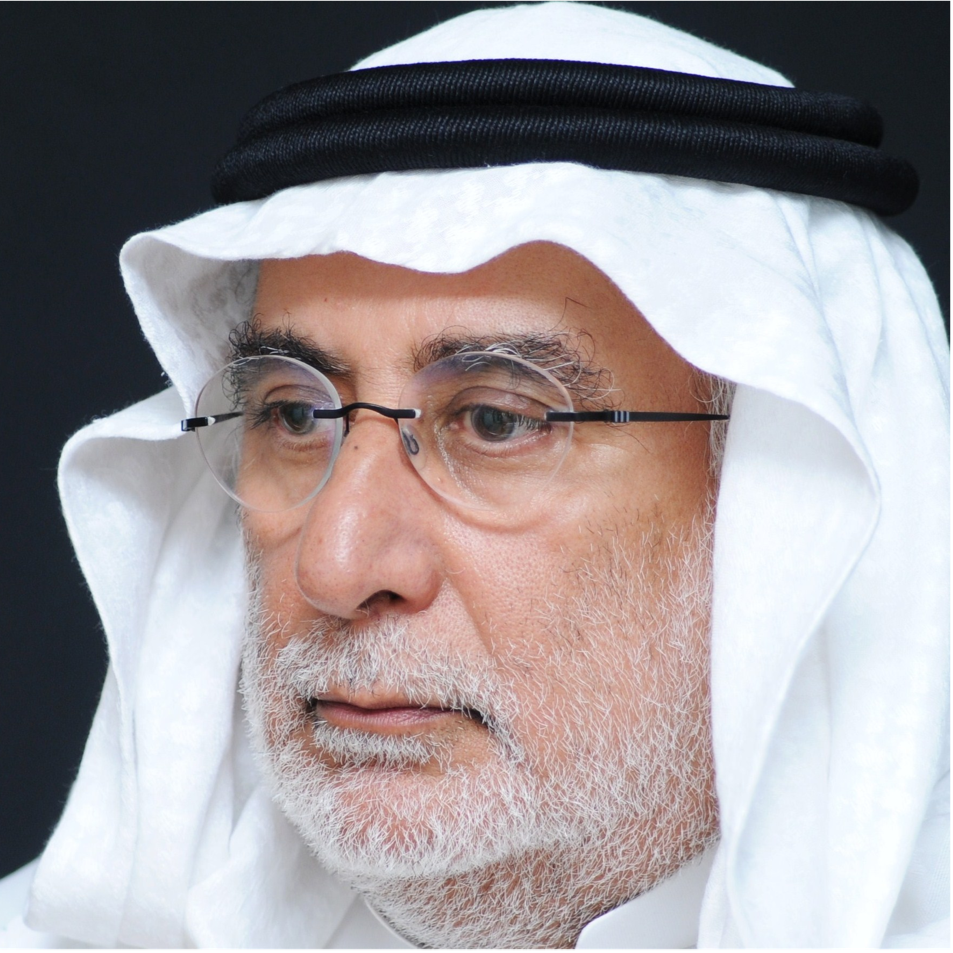
Ali M. Al-Shuaibi is a Saudi architect, urban planner, educator, and co-founder/partner of Beeah, one of the Kingdom’s pioneering architecture and planning consultancies. He studied architecture at King Saud University in Riyadh before completing postgraduate studies in urban design at MIT in 1975. Since founding Beeah in 1975, he has contributed significantly to the evolution of Saudi urbanism, with work spanning civic centers, parks, residential districts, cultural facilities, public landscapes, and complex mixed-use developments.
Al-Shuaibi is closely associated with Riyadh’s Diplomatic Quarter and with Al-Kindi Plaza, designed by Beeah Group Consultants with Abdul-Rahman Hussaini, which received the Aga Khan Award for Architecture in 1989. The project was recognized for integrating mosque, public services, commerce, shaded pedestrian movement, courtyards, and climate-responsive landscape into a contemporary yet culturally grounded urban model.
Beyond practice, Al-Shuaibi has served on major juries and professional bodies, including the Aga Khan Award for Architecture Master Jury, and has contributed to architectural education, heritage, conservation, and urban design discourse in Saudi Arabia and internationally. His career reflects a sustained commitment to context, culture, environmental responsibility, and the shaping of humane public places.
Rasem Badran
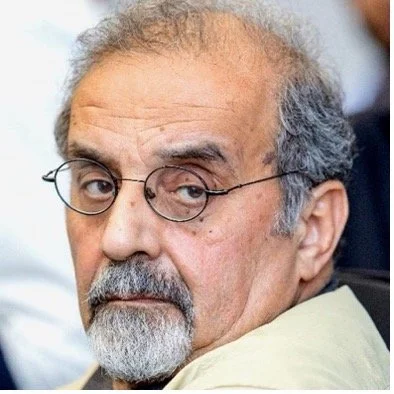
Dr. Rasem Badran is an internationally acclaimed architect, urban designer, and thought leader whose work has profoundly shaped contemporary architecture and public realm development across the Middle East. With a career spanning several decades, he is widely recognized for his ability to reinterpret traditional Arab and Islamic architectural principles into modern, contextually responsive design solutions.
Dr. Badran has led the design of numerous landmark projects across Saudi Arabia and the region, including urban developments, cultural institutions, and civic spaces that prioritize human scale, environmental sensitivity, and cultural identity. His approach integrates architecture, landscape, and urban planning to create cohesive and meaningful environments that enrich communities.
A recipient of numerous prestigious international awards, including the Aga Khan Award for Architecture, Dr. Badran is celebrated for his enduring contribution to the built environment and his influence on generations of architects and planners.
Through his work, he continues to advocate for sustainable, culturally grounded development that responds to both the natural landscape and the social fabric of cities.

Alberto Bounous
Alberto Bounous, RIBA, ARB, MAPM is currently Vice President Design & Development at KAFD DMC (a PIF company), a landmark urban development in the heart of Riyadh. Leading the company’s new real estate commercial, hospitality and residential developments (in excess of SAR40 billion).
Before joining KAFD, Alberto was Chief Development Officer (A) at AlUla Development Company (a PIF company), a spin-off from the Royal Commission for AlUla where he spent the previous three years as a Development Director completing several developments including landmark cultural and hospitality projects like the Maraya Festival Hall, host of the 2021 GCC Summit and the award winning Habitas AlUla Resort (2021).
Alberto is a qualified architect (RIBA ARB) both in the UK and in Italy and a Member of the British Association of Project Managers (MAPM).
He graduated from the Turin School of Architecture in 1994 and was awarded scholarships to postgrad courses at the Bartlett School of Architecture (London UCL) and Universidad de Las Palmas (Spain). Committed to ongoing education and learning, Alberto attends courses at the Cambridge Judge Business School and INSEAD AVIRA programme.
Anas Serafi
Anas bin Muhammad Saleh bin Hamza Serafi is a Saudi architect, consulting engineer, business leader, and civic figure with extensive experience across architecture, engineering consultancy, real estate, investment, education, heritage, and urban development. He holds a Bachelor’s degree in Architecture from King Abdulaziz University in Jeddah and is classified as a consulting engineer by the Saudi Council of Engineers.
He is the founder and chairman of Al-Abnia Engineering Consultants and serves as CEO of Al-Salehat Holding Company. His professional and board roles span a wide range of institutions, including Taiba Investment Company, Arch Capital Financial Company, Silwan Real Estate Development Company, Al-Balad Al-Amin Development Company, and the National Center for Family Businesses. He has also held leadership and advisory positions with the Jeddah Local Council, the Umran Saudi Society for Urban Planning, the Arab Architects Association, King Abdulaziz University, Effat University, Dar Al-Hekma University, and the Urban Heritage Society.
Serafi’s career reflects a broad commitment to the built environment, civic development, charitable work, education, and cultural heritage. Through his consulting practice, board service, and institutional leadership, he has contributed to the development of Jeddah and the wider Kingdom, combining professional expertise with a strong record of public service.

Farouk Tadros
Farouk Tadros, Assoc, AIA is an accomplished architect and landscape architect with more than 30 years of professional experience in Jordan and across the region. He holds a Bachelor of Architecture and a Master of Landscape Architecture from the University of Southern California. In 1996, he founded Infinity Design, a multidisciplinary practice specializing in architecture, landscape architecture, and urban design.
His work spans city parks, archaeological and cultural heritage sites, tourism destinations, natural reserves, xeriscape and water-efficient landscapes, and native and adaptive planting strategies. He is particularly recognized for his expertise in sustainable landscape solutions, arid-land construction techniques, and durable hardscape systems.
Farouk has also contributed to academia as a part-time lecturer at several universities in Jordan, teaching architecture, landscape design, construction materials, and urban design. From 2000 to 2002, he was selected by the Greater Amman Municipality as part of the design consortium for Al Hussein Park, Jordan’s largest public park.
He has consulted for leading NGOs and international firms, including the World Bank, USAID, UNDP, AECOM, Chemonics International, DAR Group, LDK Consultants, KPMG, and IDOM. He is active in the Jordan Engineers Association and serves as a Director with AIA Middle East.
We are deeply grateful to the jury for their generous participation and for the time, insight, and expertise they will bring to the evaluation process. Their collective perspectives, spanning architecture, landscape, urbanism, sustainability, cultural heritage, education, and professional practice, will be invaluable in identifying proposals that are not only design-led and environmentally responsible, but also deeply responsive to the landscape, culture, and future potential of Ta’if.